Destructive passion and unyielding pride collide with divine vengeance when mortals dare to deny the gods their due.
In Short
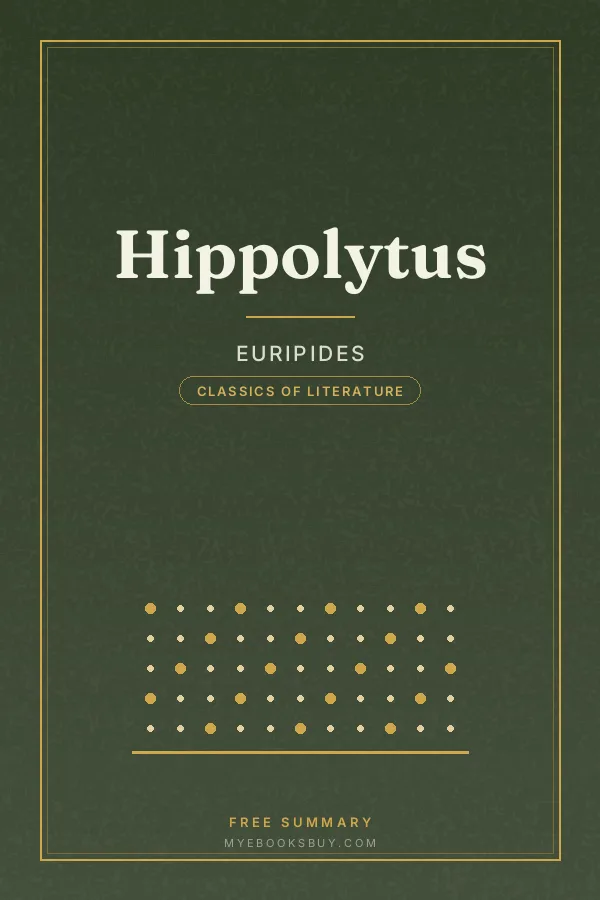
This volume presents two raw classical Greek tragedies by Euripides exploring the fatal costs of emotional excess and religious arrogance. In Hippolytus, a chaste huntsman rejects Aphrodite for Artemis, triggering a catastrophic sequence of secret lust, false accusations, and royal curses that ruin his family. In The Bacchae, King Pentheus refuses to acknowledge the divinity of Dionysus, attempting to suppress his ecstatic cult until the god drives the city mad and engineers the king's horrific dismemberment. Both plays endure because they lay bare the fragile nature of human control against overwhelming, irrational forces.
The Story
The volume opens with Hippolytus, set in Troezen. The goddess Aphrodite announces her intent to punish the young prince Hippolytus, who honors only the virgin huntress Artemis and despises love. Aphrodite strikes Hippolytus's stepmother, Queen Phaedra, with an agonizing passion for the young man. Ailing and desperate to protect her honor, Phaedra resists for three days before her well-meaning Nurse coaxes the secret from her. Against Phaedra's strict orders, the Nurse reveals the secret affection to Hippolytus, who responds with a furious rant against all women. Overwhelmed by shame and fearing public disgrace, Phaedra hangs herself, leaving behind a letter falsely accusing Hippolytus of violating her.
When King Theseus returns, he finds his dead wife and her letter. Ignoring his son's desperate pleas and sacred oaths of innocence, Theseus banishes Hippolytus and calls upon his father, Poseidon, to grant a deadly curse. As Hippolytus drives his chariot along the coast, a monstrous bull emerges from the sea, frightening the horses and dragging the prince over the rocks. The goddess Artemis appears to the grieving Theseus, revealing Phaedra's lie and declaring Hippolytus's innocence. The broken youth is carried home, where he forgives his heartbroken father just before dying.
The scene shifts to Thebes in The Bacchae, where the god Dionysus arrives in human disguise to establish his worship and punish the royal house for denying his divine birth. The city's women, swept up in divine frenzy, flee to Mount Kithaeron to perform wild Bacchic rites. The blind prophet Teiresias and the old king Cadmus urge the young ruler, Pentheus, to yield to the new god, but Pentheus vows to crush the movement. He arrests the disguised Dionysus, stripping him of his sacred wand and locking him in the stables, though the god easily frees himself through earthquakes and fire.
A mountain messenger reports that the frantic Bacchantes are performing miracles, nursing wild animals, and tearing cattle apart with their bare hands. Sensing the king's hidden curiosity, Dionysus tricks Pentheus into dressing in women's clothes to spy on the women unseen. Dionysus leads the king to the mountain and bends a tall pine tree to set him at its top. On the god's command, the maddened women, led by Pentheus's own mother Agave, uproot the tree. Blinded by religious delusion, Agave mistakes her son for a wild lion and tears him limb from limb. She returns to Thebes proudly carrying his severed head on a pike, only for Cadmus to slowly restore her sanity and make her realize the horrific slaughter she committed. Dionysus appears in glory to exile the remaining royal family, leaving the city in ruins.
How It Unfolds
A goddess sets her trap Aphrodite declares her plan to destroy Hippolytus for scorning her altars, using Queen Phaedra's forced, agonizing infatuation as her instrument.
A secret escapes Phaedra's loyal Nurse coaxingly uncovers the Queen's fatal secret and unwisely betrays it to Hippolytus, who reacts with bitter contempt.
Death leaves a lie To preserve her honor and protect her children's future, Phaedra commits suicide, leaving a false written charge of assault against her stepson.
A father's fatal curse Theseus refuses to believe Hippolytus's protests of innocence, banishing him from the realm and invoking Poseidon to destroy him.
Truth brought by divine light After a sea monster fatally shatters Hippolytus's chariot, Artemis arrives to expose the truth, allowing the dying youth to forgive his father.
A ruler defies a god King Pentheus rejects Dionysus's divinity, defying the warnings of Cadmus and Teiresias as he attempts to outlaw the wild Bacchic rites.
The prisoner breaks free Pentheus arrests the disguised god and locks him away, but Dionysus shatters the palace with an earthquake and easily steps out of his chains.
A deadly temptation Dionysus plays on Pentheus's secret curiosity, persuading the king to disguise himself in feminine robes to spy on the wild mountain worshippers.
Slaughter on the mountain The ecstatic women discover Pentheus atop a pine tree, and his own mother Agave leads the pack in tearing his body apart.
Sanity brings ruin Cadmus helps Agave recover from her trance to recognize her son's head in her hands, whereupon Dionysus condemns the surviving family to bitter exile.
The People
- Hippolytus: A devout huntsman and bastard son of Theseus. He seeks pure devotion to Artemis and total chastity, but his arrogant rejection of Aphrodite and contempt for women bring about his tragic downfall. He dies forgiving his father.
- Phaedra: The Queen of Athens, torn between her involuntary, god-sent passion for her stepson and her desire to maintain her moral integrity. Her fear of public disgrace drives her to suicide and a bitter false accusation.
- Theseus: The King of Athens, who desires immediate justice but acts out of blind rage. His hasty trust in his dead wife's letter leads him to curse his innocent son, leaving him broken with grief when the truth is revealed.
- Pentheus: The rigid young King of Thebes, who wants law and civil order above all else. His refusal to accept Dionysus and his suppressed fascination with the Bacchic rites make him vulnerable to the god's lethal manipulation.
- Dionysus: The god of wine, ritual madness, and ecstasy. Appearing first as a soft, gentle stranger, he desires recognition of his divine lineage and ruthlessly orchestrates the total destruction of his mortal enemies.
- Agave: The mother of Pentheus, swept up in Bacchic madness. She seeks to serve her new god with wild vigor, only to become the instrument of her son's horrific death before awakening to her ruined life.
In Its Own Voice
"The burden of Wild Will and the burden of Pain."
— The Chorus of Troezenian women reflects on the inescapable emotional and physical suffering that haunts the lives of mortals.
"To make a true heart there where no heart is!"
— Theseus laments human deceit as he mistakenly condemns his innocent son based on Phaedra's written lie.
"A strait pitiless mind is death unto godliness..."
— The Bacchic Chorus warns against rigid intellectual pride that refuses to honor the mysterious forces of the divine.
What It's Really About
These plays probe the dangerous human illusion of absolute self-control. Euripides exposes what happens when individuals attempt to deny fundamental aspects of nature and the human psyche—whether it is Hippolytus trying to live entirely without sexual desire or Pentheus attempting to banish emotional fervor and religious ecstasy from his city. The gods in these dramas are not benevolent guardians; they represent terrifying, impersonal forces that crush anyone who refuses to acknowledge them. Through the downfall of his figures, Euripides asks whether human morality and law can ever survive when caught between competing divine demands, illustrating how easily grief, pride, and fanaticism turn well-meaning people into agents of their own destruction.
Why Read It Today
This translation offers readers a direct line to the foundational psychological drama of Western literature. Euripides remains surprisingly modern in his focus on human vulnerability, the complexity of female characters, and the disastrous consequences of ideological rigidity. Reading these plays in Gilbert Murray's verse translation creates a heightened, poetic experience where formal choral odes alternate with intense, personal arguments.
The primary difficulty for contemporary readers lies in navigating the formal elevated language and the archaic theatrical conventions, such as extended choral commentaries and sudden interventions by gods on high. Yet beneath the classical framework beats a intensely relatable human pulse. The sharp back-and-forth dialogue exposes psychological flaws that feel completely recognizable today. Anyone drawn to explorations of family tragedy, religious zealotry, and the devastating impact of repressed emotion will find this volume deeply satisfying. It leaves you with a lasting, unsettling appreciation for the uncontrollable forces that shape human life.
This summary was written by AI (g4f/auto) on 2026-08-19 and is a guide to the book, not a replacement for it — it can be incomplete or wrong. The book itself is public domain. Copyright & AI disclosure · Report a problem