Free summary
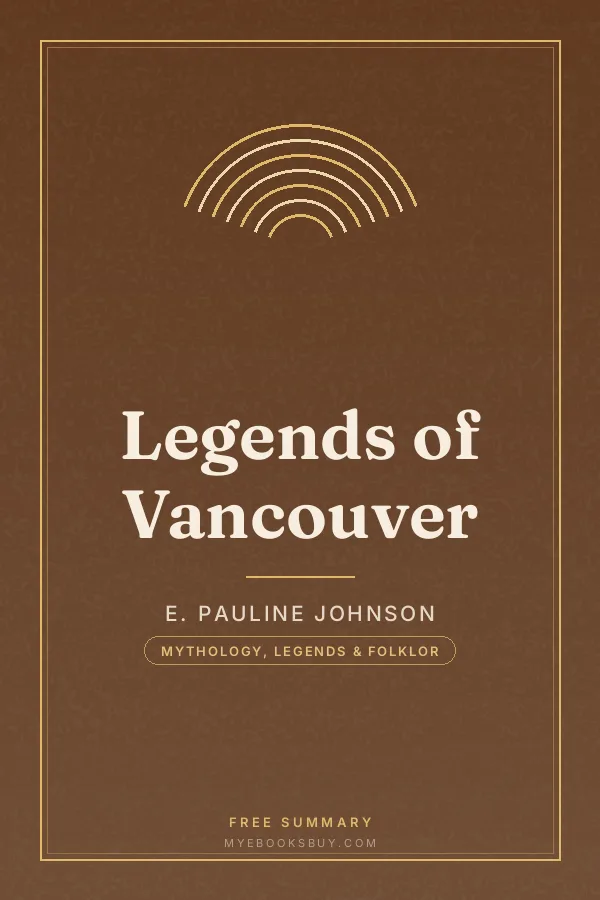
Legends of Vancouver
E. Pauline Johnson (1861–1913)
The mountains and waters of the Pacific Coast hold echoes of an ancient world, preserved in the stories of those who walked these shores long before the city rose to meet them.
In Short
This collection brings together a series of Squamish and Coast Salish legends shared with the author by Chief Joe Capilano. Through a blend of myth, oral history, and natural observation, the book captures the spiritual geography of Vancouver and its surrounding wilderness. It serves as a bridge between the rapid industrialization of the early 20th century and the deep, immemorial traditions of the Indigenous peoples of the region. The work has endured as a lyrical, poetic record of a landscape viewed through a lens of profound cultural respect and storytelling tradition.
The Story
The narrative arc of the book is defined not by a single protagonist, but by the unfolding of a landscape’s history through its legends. It begins by establishing the setting—a rugged, majestic coast where nature and human life are inextricably linked by ancient laws. Stories like "The Deep Waters" recount the survival of the tribe through a great deluge, where the bravery of a young mother and a stalwart warrior saves the next generation, establishing a moral foundation for their descendants.
As the accounts progress, the focus shifts to specific landmarks and the moral lessons woven into their creation. We learn of the "Two Sisters," who implore their father to invite hostile northern tribes to a feast, choosing peace and the potential for a future generation over continued blood-feuds. This theme of choosing harmony persists, yet it is balanced by the darker realities of the world. Tales of the "Sea-Serpent" and the "Witch-Woman" illustrate how evil, greed, and malice are purged from the world through the intervention of the Sagalie Tyee (the Great Spirit) or the self-sacrifice of heroes who embody "cleanliness and generosity."
The middle portion of the book delves into personal encounters between the author and her informants, particularly the klootchman (an older woman of the tribe) and Chief Capilano. These interactions ground the mythology in the present day, showing how the traditions remain a living, breathing part of the elders' lives. The stories frequently touch upon the encroachment of the "Paleface" and the quiet, mournful realization that the old ways are being pushed to the periphery. The legend of the "Lost Island," where the courage of a great medicine-man is hidden away to be reclaimed by future generations, reflects this anxiety about cultural preservation.
The book concludes by tying the mythic past to the British colonial present. A final, reflective account details the adoption of a British prince into the Mohawk tribe, using ancient rituals to honor a visitor. This inclusion underscores the complexity of the author’s own position as a Mohawk woman documenting the stories of the Squamish. The ending is not a finality but a lingering note of transition, where the beauty of the landscape—the singing rivers and the grey archways of the northern islands—remains, even as the stories themselves become part of a fading, though vital, history.
How It Unfolds
The genesis of the stories The author establishes her bond with Chief Joe Capilano, whom she met in London. She explains that these legends were shared with her in confidence, intended to preserve the cultural memory of the Squamish people.
Foundational myths of the coast Early chapters detail the creation of the world and the survival of the tribes during the Great Flood. These stories define the character of the people—valuing courage, purity, and the protection of children above all else.
The moral weight of the landscape Specific features, such as Stanley Park and the Narrows, are linked to legends of transformation. The narrative explains how evil figures were turned into stone to protect the land from further corruption.
Encounters with the living tradition The author recounts meetings with tribal elders on the shores of the Narrows. These conversations emphasize the importance of passing knowledge to the next generation, even when faced with the pressures of modernization.
The intersection of two worlds The book concludes by highlighting the author's own heritage, contrasting the ancient Mohawk constitution with the arrival of European royalty. It reflects on the role of memory and the preservation of identity in an era of rapid colonial change.
The People
Chief Joe Capilano stands as the primary vessel of the traditions. He is a man of immense gravity and dignity, serving as the bridge between his ancestors' lore and the author. His desire is to keep the "courage and fearlessness" of his people alive, fearing that the encroachment of the white man’s world will cause these virtues to die out. He acts as a teacher, his memory and wisdom mirroring the clear pools of his homeland.
The "Tenas Tyee" (Little Chief) represents the ideal of the heroic youth. He is defined by his physical beauty and his commitment to the welfare of his tribe, particularly the elderly and the weak. He is not motivated by conquest, but by the struggle to overcome "unclean" forces through generosity and personal purity. His legacy is one of self-sacrifice, as he seeks to secure a future for his people.
The "Klootchman" (the older woman) provides a more domestic, intimate perspective on the legends. She is an expert fisher and a storyteller who anchors the myths in the rhythm of the salmon runs and the birth of her own grandchildren. Her presence reminds the reader that these legends are not merely distant history, but a framework for daily life, family, and the continued survival of the culture.
The author, E. Pauline Johnson, serves as both observer and participant. Her own background as a Mohawk woman gives her a unique, empathetic vantage point. She does not merely report the legends; she interprets them with a literary sensibility, acting as a translator for a world she views with profound reverence.
In Its Own Voice
"It is your privilege at this celebration to receive any favor your hearts may wish," he replied graciously, placing his fingers beneath their girlish chins.
The Chief speaks to his daughters, establishing the theme of generosity that governs the feast.
"I must be clean, spotlessly clean, so that when his child looked out upon the world it would have the chance to live its own life clean."
A father prepares for the birth of his child by swimming in the Narrows, following the tribal law of vicarious purity.
"When we do, we will get back all the courage and bravery we had before the white man came, for the great medicine-man said those things never die--they live for one's children and grandchildren."
The Chief explains the significance of the "Lost Island," where the spirit of his ancestors' strength is guarded for future generations.
What It's Really About
At its heart, this book is an exploration of the sanctity of place and the endurance of human character. It argues that history is not merely a record of dates and treaties, but a landscape of moral lessons, where the physical features of the earth—mountains, rocks, and rivers—serve as permanent monuments to the virtues of a people. The central tension lies in the struggle to maintain this spiritual connection to the land in the face of a changing world. It raises the question of whether a culture can survive when its environment is transformed by forces that do not share its myths, ultimately suggesting that beauty and truth are resilient as long as they are remembered and spoken aloud.
Why Read It Today
Readers who appreciate the intersection of folklore, natural history, and lyrical prose will find this work deeply rewarding. It reads like a long, quiet conversation on a misty shore, filled with the cadence of the ocean and the gravity of an elder’s voice. The writing is elegant and precise, capturing the atmospheric beauty of the Pacific Northwest with a romantic, if occasionally formal, touch.
However, readers should be prepared for the period-specific attitudes of the early 1900s. The author’s romanticized view of "primitive" life and her use of terminology common to her era reflect the cultural limitations of her time. Additionally, the structure is loosely episodic, which may feel unconventional to those accustomed to modern, tightly plotted narratives. Despite these complexities, the book remains a powerful experience for those interested in the history of Canadian literature or the preservation of Indigenous storytelling. What lingers long after reading is the author's deep, genuine affection for the landscape and her conviction that the stories embedded within the earth are essential to understanding our place in the world. It is a work of heartfelt advocacy that seeks to turn the "hurrying city" of Vancouver into a place of deeper meaning.
This summary was written by AI (gemini-3.1-flash-lite) on 2026-08-30 and is a guide to the book, not a replacement for it — it can be incomplete or wrong. The book itself is public domain. Copyright & AI disclosure · Report a problem