Cold North Sea spray, rusted hulls, and the quiet, deadly routine of the men who keep the ocean lanes open form the heart of this portrait of naval endurance during the First World War.
In Short
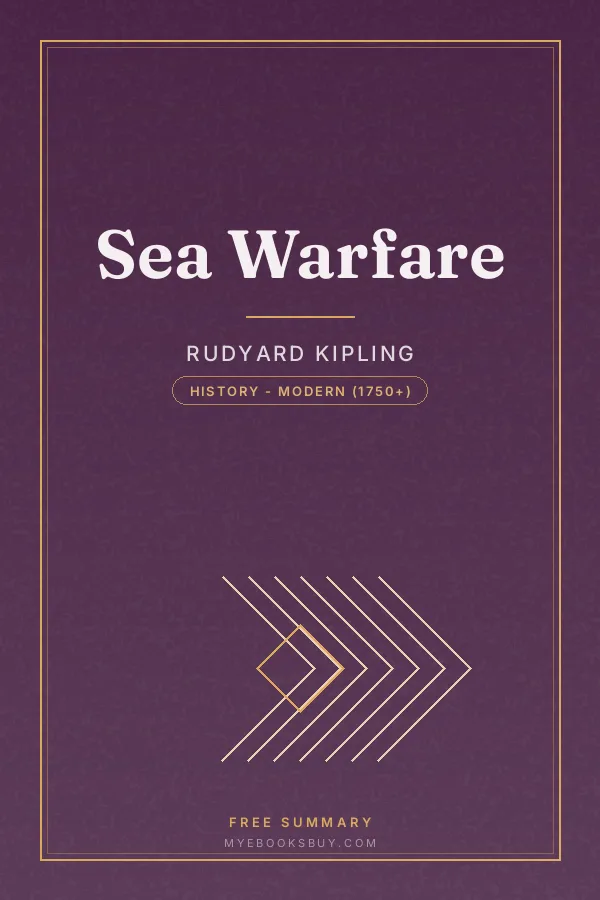
This book is a vivid, first-hand chronicle of the British Royal Navy and its auxiliary fleets operating during World War I. Blending observational prose, verse, and official battle reports, it captures the everyday reality of mine-sweepers, submarine crews, and destroyer flotillas patroling the North Sea and fighting in the Battle of Jutland. It has lasted because it rejects grand tactical grandiloquence in favor of the human, humorous, and stoic spirit of the sailors themselves, preserving the authentic voices and unglamorous labor that sustained Britain’s maritime blockades and combat patrols.
The Story
The book opens with a tribute to the merchantmen, converted trawlers, and civilian volunteers who form the auxiliary backbone of the Senior Service. These improvised warships, retrofitted with government coal and light deck guns, range across the North Sea to sweep for mines, chase periscopes, and police traffic lanes. The narrative moves down into the dark, cramped hulls of the submarine service—familiarly known as "The Trade"—following vessels like E9, E14, and E12 as they breach enemy-controlled waters. In the Baltic and through the treacherous, mine-choked narrows of the Dardanelles into the Sea of Marmara, these submarine crews endure jammed steering gear, failing motors, and the constant threat of depth charges. They tangle with enemy shore batteries, dodge net defenses, and stalk enemy transports, operating in absolute isolation where a single mistake or a stray mine snagged on a diving fin means total destruction.
From the silent, submerged warfare of the submarines, the narrative shifts outward to the surface patrols and the chaos of major fleet engagements, culminating in accounts of the Battle of Jutland. Here, the text focuses on the destroyer flotillas—the fast, lightly armored craft tasked with screening battle-cruisers and launching torpedo attacks through thick sea mist and blinding heavy-artillery fire. Night actions dissolve into chaotic single-ship brawls where friend and foe are distinguished only by fleeting silhouettes in searchlight beams. The book details the aftermath of these clashes: battered destroyers limping home with ripped skin-plating and destroyed bridges, crews exchanging morbid humor, and the quiet return to routine. It closes not with a grand victory speech, but with a reflective poem questioning the moral stance of neutral nations who profit from or remain silent during such monumental human sacrifice.
How It Unfolds
The auxiliary fleet sets out Converted herring trawlers and civilian yachts, manned by veteran skippers, young third mates, and aging engineers, take to the North Sea armed with light guns and mine-sweeping cables to police the shipping channels.
Submarines breach the narrows British submarines slip through enemy minefields and defensive nets into the Baltic and the Sea of Marmara, where they sink enemy supply transports, engage shore batteries, and navigate under constant fire.
The hazard of the minefields Crews contend with extreme operational hazards, from steering gear failures during depth-charge attacks to dragging unexploded enemy mines hooked directly onto their hydroplanes out into safe waters before surfacing.
Surface battles in the mist Destroyer flotillas engage enemy battle-cruisers and light cruisers during the Battle of Jutland, maneuvering at high speed through dense smoke, searchlight glares, and catastrophic naval gunfire.
Returning to port Severely damaged vessels crawl back to home waters, their surviving crews tending to battered machinery and preserving their sanity through dry humor, practical duty, and the care of shipboard pets.
The People
- The Mine-Sweeper Commander: A North Country trawler captain who views the deadly job of clear-cutting mines with casual detachment. He insists there is "nothing in sweeping" except dragging a wire rope until it fouls a mine, bringing it to the surface, and shooting it with a galley rifle, asking only for carefulness to avoid blowing up.
- The Lieutenant-Commander-Admiral: A retired senior officer who returns to active duty at the outbreak of war to command a fleet of Dogger Bank fishing trawlers from a converted private yacht. He leads his tough, civilian-born crews through hazardous waters using a mixture of deep naval wisdom and colorful, "Popocatapocalyptic" language.
- The Submarine Commanders (E14, E9, E12, E2): Officers who navigate crippled, leaking vessels through enemy nets and shallow waters. They want only to execute their orders "as requisite," whether that means tearing through anti-submarine nets, enduring rifle fire from shore, or patiently waiting out surface patrols in smooth seas.
- The Destroyer Lieutenant: A surface commander maneuvering his fast, exposed ship through the high-stakes chaos of night actions at Jutland. He stoically accepts the extreme danger, managing short-tempered signallers, dodging enemy torpedoes, and keeping his vessel fighting even when pounded by heavy artillery.
In Its Own Voice
"The Navy is very old and very wise. Much of her wisdom is on record and available for reference; but more of it works in the unconscious blood of those who serve her."
Kipling introduces the deep-seated tradition and unwritten institution of the Royal Navy at the start of the war.
"'There's nothin' in sweepin' more than that.' 'And if you hit a mine?' I asked. 'You go up--but you hadn't ought to hit em', if you're careful.'"
A mine-sweeper sailor nonchalantly explains the lethal routine of sweeping for explosives in the North Sea.
"A little British destroyer, her midships rent by a great shell meant for a battle-cruiser; exuding steam from every pore... her crew fallen in aft dressed in life-belts ready for her final plunge, and cheering wildly as it might have been an enthusiastic crowd when the King passes."
An official report captures the defiance of a sinking ship's crew during the chaotic aftermath of the Battle of Jutland.
What It's Really About
The book explores the unglamorous reality of modern naval warfare, contrasting grand strategic expectations with the grueling, repetitive labor required to control the seas. It highlights the tension between ancient maritime tradition and novel, mechanized destruction—such as submarines, depth charges, and floating mines. At its core, the text examines the collective professional code of the British sailor, defined by understatement, anti-heroic humor, and absolute devotion to duty. The individual is repeatedly shown to be subordinate to the survival of the group and the vessel; as the included verses emphasize, "the game is more than the player of the game, / And the ship is more than the crew!"
Why Read It Today
Readers drawn to naval history, military strategy, or early twentieth-century prose will find this account a deeply authentic visual and human document. Rather than focusing on grand fleet maneuvers from an Admiral's desk, it places the reader directly on the spray-slicked decks of trawlers and inside the foul-smelling, claustrophobic iron hulls of early submarines. It offers an immediate, ground-level perspective on World War I at sea, rich with technical details of early 20th-century seamanship and battle tactics.
The reading experience requires some patience. The prose is dense with period naval terminology, official logbook jargon, and written phonetic dialects representing North Country trawler men and lower-deck sailors. Furthermore, the work carries the unvarnished wartime biases and anti-German sentiment typical of British publications in 1916. Yet, what lingers long after reading is the quiet resilience of the men, the dark humor shared between deckhands in the face of imminent destruction, and the singular focus on doing a difficult job without complaint or grandstanding.
This summary was written by AI (g4f/auto) on 2026-08-31 and is a guide to the book, not a replacement for it — it can be incomplete or wrong. The book itself is public domain. Copyright & AI disclosure · Report a problem